The Bento Flirts Harder Than Any Confession: Romance Manga's Food Language

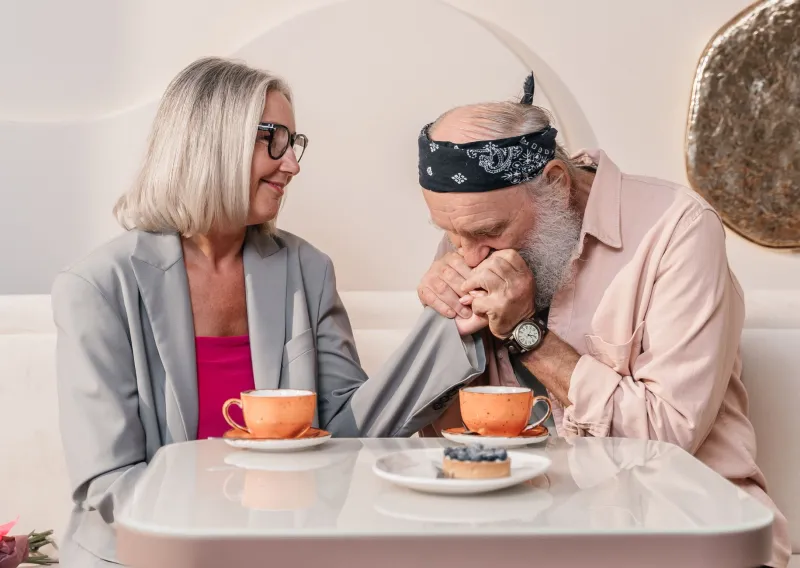
Photo by Photo by Mathias Elle on Unsplash on Unsplash
It's the Sunday before Thanksgiving, my fridge is already a Tetris game of containers, and I've been thinking about the most romantic panel in romance manga.
It's not a kiss. It's a bento box with the lid half off, handed over with the least convincing excuse in fiction: “I made too much.”
That's it. That's the whole move. Nobody says anything about feelings. Somebody just gets fed, and the entire relationship shifts two inches to the left.
The Convenience Store Is a Confession Booth
There's a scene type that shows up in nearly every romance series worth reading, and it costs about 300 yen. Two characters, a konbini, terrible fluorescent lighting, and one pudding split with two plastic spoons at eleven at night.
Why does it work? Because nobody can perform in a convenience store. You can't be brooding and mysterious while deciding between a melon bread and a curry bun. Your hair is flat, you're in your school shoes or your work clothes, and you're hungry. A character who's hungry is a character whose guard is down, and a guard down is the only thing romance needs.
When two people eat something mediocre together at an hour when neither of them should be awake, the story is telling you something it can't say out loud: this person is easy to be around.
Cooking Is a Compatibility Test (and a Class Marker)
Here's where manga gets sneaky. Food scenes communicate things the dialogue never touches.
A character who cooks is telling you about their household, their budget, and their patience. A character who buys is telling you something else. A bento with a dozen little compartments and a decorative egg says “I got up at 5 a.m. for you.” A plate of instant ramen with an egg dropped in says “I got up at 5 a.m. for you, but I'm broke.”
And when a story stages dinner at a lead's family home, food becomes a status document. The specific stew, the specific dishware, whether there's a second helping offered — all of it quietly maps out who these people are, where they live, and what it'll cost someone to join them.
It's a class marker disguised as a dinner party. It's the most efficient character work in the medium, and it usually happens in nine panels.
Feeding Someone Is a Love Letter You Can Eat
The reason these scenes land so hard is that they're about labor, not passion. Passion is cheap on a page. Cooking for someone requires a plan and a future tense.
The great romantic gesture in food form isn't the fancy dinner in volume ten. It's the discovery that she takes her coffee a specific way and he has started making it that way without thinking. It's the character who notices the other one didn't eat at lunch. It's the improvised dinner after a bad day that's not a celebration, just a Tuesday.
And the cleanup. Writers rarely show the dishes, but when they do, it's the endgame. Whoever does the dishes is the one who's staying.
What US Readers Are Seeing in It
We have our own version of this, sort of. “Want to get dinner sometime?” is the lowest-stakes date in America — the neutral phrasing of a country that loves the idea of eating together and is a little shy about saying anything that actually means something.
So when a manga character makes food specifically for another person, wraps it, and then undercuts the whole thing with a shrug, American readers get the fantasy version of a thing we genuinely struggle with: expressing care without a cover story.
Also, I'm going to say it. We read while eating. A food scene in a chapter we're reading over a plate of takeout is a two-layer experience, and the genre knows exactly what it's doing.
Five Food Moments That Live Rent-Free
1. What Did You Eat Yesterday? — the entire series is the argument. Shiro's grocery budget, his careful cooking, the way a meal becomes the only way he can say the thing he can't say. Fumi Yoshinaga writes food better than anyone in the industry.
2. Kakuriyo: Bed & Breakfast for Spirits — every meal is a negotiation, a peace offering, and a power move, sometimes in the same bowl.
3. The Way of the Househusband — a former gangster making tonkatsu is the funniest love letter to domestic labor ever drawn, and it's genuinely sweet underneath the bit.
4. Skip and Loafer — Mitsumi is unembarrassed about how much she loves food, and the story never punishes her for it. Being fed equals being accepted. Nobody has to explain that to the reader.
5. My Giant Nerd Boyfriend — snack logistics, grocery runs, and the utterly unphotogenic reality of sharing a life. The webtoon's most romantic panels are usually about dinner.
How to Read a Food Scene
Three questions, every time. Who cooks? Who eats first? Who does the dishes?
You can predict the endgame couple of almost any romance series in the first five chapters just by watching those three answers. The couple that divides the labor without discussion? They're fine. The couple that argues about the bill and then shares a fork anyway? They're in trouble, but they're going to make it.
Kisses are great. Kisses are a promise. But somebody went to the store on a Wednesday, and that's a whole life together.